


Why Wedding Timing Matters More Than You Think (And the Best Time to Say “I Do”
When planning a wedding, most couples focus on venues, colors, florals, and music—but one of the most important decisions often gets overlooked: the time of day.
Wedding timing directly affects how your photos and video will look. And not just a little—it can make the difference between harsh, squinty images and soft, cinematic memories you’ll love forever.
Why Midday Is the Toughest Time for Photos & Video
If your wedding reception is scheduled before 12 noon, your photos typically fall around midday. Midday is when the sun is at its highest point in the sky, producing the harshest natural light.
Harsh midday light causes:
Dark shadows on faces (especially under eyes and noses)
Squinty eyes from bright sunlight
Uneven skin tones and strong contrast
The classic “raccoon-eye” look in photos
This applies to video as well. Harsh light creates moving shadows, blown highlights, and constant squinting that’s hard to ignore on camera.
Add Florida heat into the mix, and it often means:
Uncomfortable wedding parties
Shiny skin and sweat
Lower energy and shorter patience
All of that shows on camera—no matter how happy everyone is.

No one likes the Sun in their eyes when taking FOREVER PHOTOS!

Midday is when the sun is at its highest in the sky. This results in harsh shadows on your face, giving you raccoon eyes.
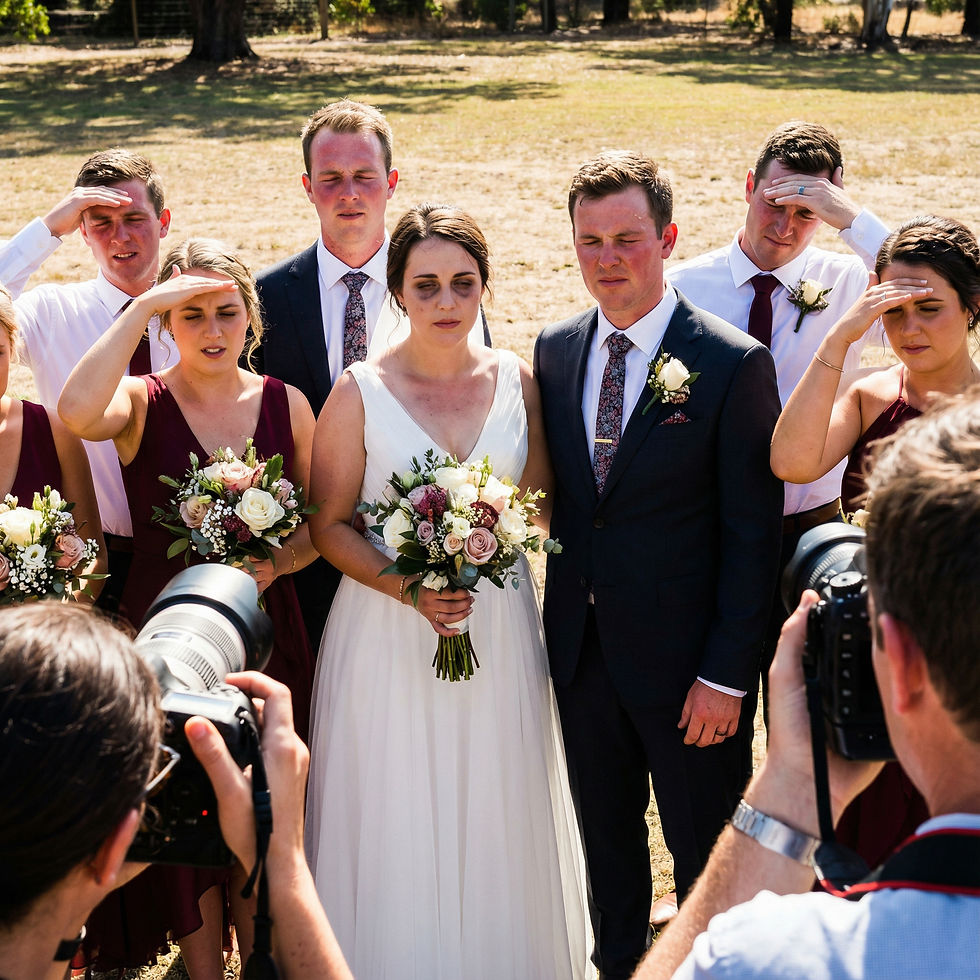
No one wants to show their future grandkids their wedding photos, having to start the conversation with "Oh, we used to be raccoons"...
The Best Time to Have a Wedding
The ideal time for a wedding is after noon, with 3:00–4:00 PM as the sweet spot.
Here’s why that timing works so well:
Ceremony around 3–4 PM
Reception begins around 4 PM
Wedding party photos fall between 5–7 PM
That window lands perfectly in Golden Hour
Why Golden Hour Is the Best Time for Wedding Photos
Golden Hour happens in the hour or two before sunset. During this time, the sun is lower in the sky, and the light becomes soft, warm, and directional—the most flattering light of the entire day.
Golden Hour creates:
Soft, even lighting on faces
Natural skin tones with minimal shadows
Relaxed eyes (no squinting)
Warm, romantic tones that feel cinematic
This is also when you get natural light flares—those soft sun streaks and glows that add depth, emotion, and a dreamy quality to photos and video. These flares happen naturally when the sun is low and filtered through trees, buildings, or the horizon—something you simply cannot get at midday.
Golden Hour light doesn’t just look better—it feels better. People are cooler, more relaxed, and more present, which shows in every image.
Why This Timing Benefits Everyone
Scheduling your wedding later in the day means:
Better lighting with less effort
More flattering photos and video
A more comfortable experience for your wedding party and guests
A calmer, more enjoyable atmosphere overall
You’re not fighting the sun—you’re working with it.
The Takeaway
If your reception happens before noon, your photos and video will likely fall during the harshest lighting of the day. But when your ceremony is scheduled after noon—ideally around 3 or 4 PM—you set yourself up for Golden Hour, the best possible lighting for wedding photos and video.
Great weddings aren’t just planned around logistics—they’re planned around light.
Alvarez, J. (2019). Understanding natural light in photography: Why golden hour matters. Journal of Visual Communication, 18(3), 214–228. https://doi.org/10.1080/15551393.2019.1641234
Hunter, F., Biver, S., & Fuqua, P. (2021). Light—Science & magic: An introduction to photographic lighting (6th ed.). Routledge.
Kelby, S. (2020). The natural light portrait book: Techniques for flattering outdoor photography. Peachpit Press.
STUDIO94™. (2026). Why wedding timing matters more than you think (and the best time to say “I do”). https://www.studio94pros.com


Comments